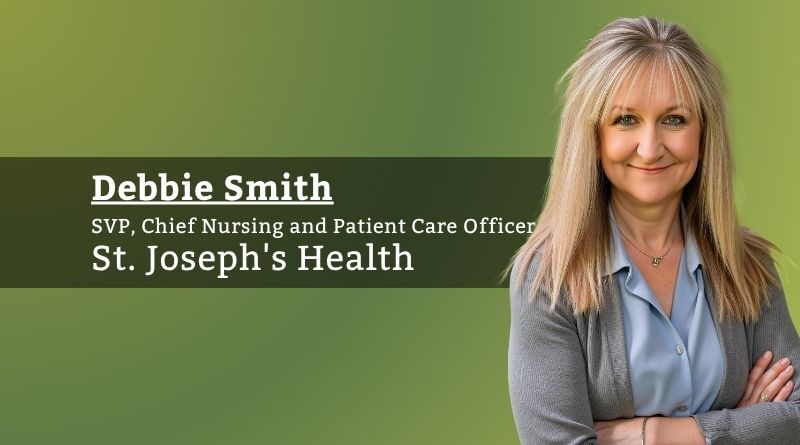
By Debbie Smith, MSN, RN, NEA-BC, SVP, Chief Nursing and Patient Care Officer, St. Joseph Health
The Growing Role of Technology in Patient Care
Technology continues to reshape healthcare, and remote patient monitoring (RPM) has become one of the most practical developments. These systems allow patients to record vital signs such as blood pressure, heart rate, oxygen saturation, glucose levels, and weight at home. Information is sent to the maintenance team, which can review patterns and intervene when needed. From my perspective as a Chief Nurse and Chief Patient Care Officer, this approach strengthens our ability to deliver consistent and coordinated care across all settings.
Remote monitoring often raises concerns about reducing in-person contact. In fact, it works very well in conjunction with traditional nursing care. It is not a substitute for clinical assessment, dialogue, or emotional support. Instead, it increases our visibility into the patient’s condition after discharge from the hospital and provides nurses with information they would not have in real time.
Technology cannot recognize fear, provide comfort, or interpret subtle emotional signals. These requirements require human presence and clinical insight.
Closing the Post-Discharge Gap
An ongoing challenge in health care is maintaining stability after discharge. Once at home, patients have fewer interactions with the system, and subtle changes may go unnoticed. A decline in vital signs may begin before symptoms become apparent, leaving patients vulnerable to preventable complications.
Remote monitoring helps bridge this gap. When patients record daily readings, doctors can see emerging trends rather than single data points. Alerts deliver timely access, often uncovering simple issues like missed medications or confusion about prescriptions. In some cases, an early change indicates a more significant change that requires closer examination.
The real value is the opportunity to intervene before the problem escalates. For people with chronic conditions, this can reduce stress and help them maintain a routine at home.
Using Data to Support Clinical Judgment
Others worry that technology may overshadow clinical expertise. The opposite is true. Remote monitoring produces more information, but judgment remains neutral. A number alone cannot distinguish between a temporary fluctuation and a meaningful change in health status. Understanding context still requires discussion and clinical insight.
Continuous data gives nurses and providers a comprehensive view of patient trends. It directs questions, sharpens assessments, and helps the care team focus on what needs attention. Technology supports decision-making, but the burden of interpretation remains with trained professionals.
Strengthening Communication and Trust
There are concerns that digital tools are reducing human interaction. In fact, they tend to improve the quality of communication. When the care team reaches out for a specific procedure, the conversation is focused and appropriate. Patients understand that the call is caused by a specific, tangible problem, not a routine admission.
This builds trust and allows in-person visits to be used more effectively. Because doctors already understand the patient’s recent readings, the appointment time can be focused on problem solving and planning rather than collecting background information.
Helping Patients Participate in Their Lives
Remote monitoring also encourages patients to actively participate in their own care. Many platforms allow them to view their data, helping them see how their daily choices affect their health. A person with diabetes may see how food affects glucose levels, while a patient with high blood pressure may see how sleep or stress affect blood pressure.
This awareness leads to clear discussions and meaningful goal setting. Over time, patients become more confident and consistent in managing their conditions. Technology encourages understanding rather than dependence.
Improving Safety and Reducing Readiness
For patients with chronic disease, the risk of relapse remains a major concern. Remote monitoring reduces that risk by identifying early signs of decline. When doctors can act quickly, through medication adjustments, more education, or timely visits, many hospitalizations can be prevented.
This approach also allows nurses and care teams to prioritize appropriately. Those with health-related trends receive immediate attention, while stable patients can stay at home with the assurance that their progress is being monitored. This supports patient safety and reduces unnecessary strain on hospitals.
Recognizing Technical Limitations
Remote monitoring brings clear benefits, but it cannot replace the in-person aspects of nursing. Technology cannot recognize fear, provide comfort, or interpret subtle emotional signals. These requirements require human presence and clinical insight.
What technology can do is give nurses and care teams more time to focus on those important aspects of care. By organizing and delivering information correctly, it supports work that can only be done by humans.
Moving Forward
RPM does not replace traditional nursing. It is an effective tool that improves responsiveness, improves communication, and strengthens continuity of care. When paired with clinical technology and the human connection at the heart of nursing, it supports better outcomes and a more reliable patient experience.
As healthcare continues to evolve, the relationship between technology and nursing will deepen. The main purpose of nursing will always be the same: caring for people with skill, clarity, and compassion, supported by tools that help us anticipate needs and respond effectively.