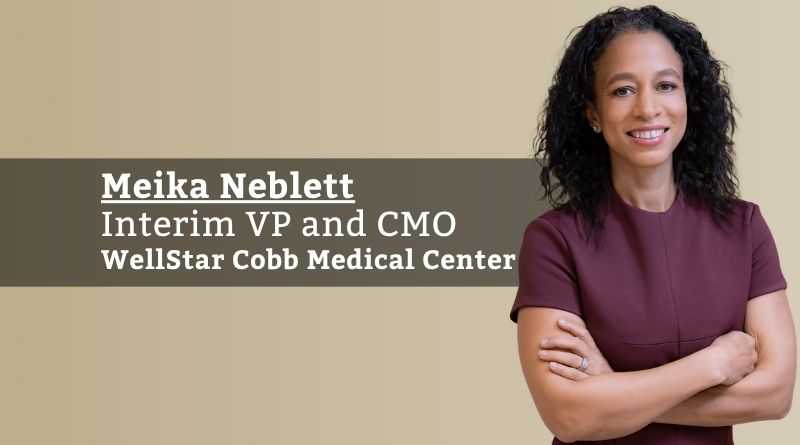
By Meika Neblett, Interim Vice President and Chief Medical Officer, WellStar Cobb Medical Center
The expansion of digital health has inspired optimism about its potential to improve access, provide continuous care beyond the hospital walls, detect early signs of deterioration, and close care spaces for those underserved by the health care system. As we experienced with this pandemic, telehealth, patient portals, remote patient monitoring (RPM), and AI-driven alerts can help democratize healthcare in underserved communities.
So, is remote monitoring a good fit?
Perhaps, but without improving digital literacy and expanding broadband access, digital transformation is inherently inequitable. Rather, it may exacerbate structural inequalities within traditional health care systems.
If we consider digital access as a core part of healthcare, then equity should be considered a functional requirement rather than an aspirational outcome.
Telemedicine Use and Persistent Inequalities
Health inequities are common in many communities, including but not limited to rural communities with limited transportation and local health care; technology-challenged adults (like my mom); working parents who cannot take time off from work; and those with disabilities and mobility limitations.
How do we achieve digital health in these communities that can benefit the most? Telehealth use and preferences are determined by structural facilitators and barriers, such as communication, device availability, trust, language access, and digital literacy, all of which are equally distributed across the population.
Building Relationships Through Frequent Contact
Black Americans have used new medical technology at lower rates than their White counterparts, due in large part to inaccessibility and well-founded suspicions about medical innovation. Historical mistrust and communication gaps have highlighted concerns about evidentiary injustice and medical gaslighting. The mistrust instilled in the institutions of medical work in Black and black communities perpetuates reluctance and reluctance to use remote monitoring and telemedicine. Trust in telemedicine must be simultaneously developed and strengthened to ensure significant uptake and retention.
Careful consideration of the fact that telemedicine can reduce doctor-patient communication, promote mistrust, and reduce misunderstandings. Ensuring that digital interactions are culturally sensitive and authentic, starts with building a strong patient-physician relationship during the in-person healthcare visit. Therefore, it is important that we train students to establish communication through digital platforms to bridge the gap in the digital communication environment.
Digitization as a Social Decision
Digital inclusion is defined as reliable internet access, affordable data plans, suitable devices, and digital skills. If we look at digital access as a determinant of social health (SDOH), we see that, like food deserts, digital deserts are more common in rural areas and poverty-stricken areas. Digital access and literacy should be added to the entire EMR when assessing other SDOH, such as access to food, housing, electricity, and personal safety.
Limited digital literacy is another barrier to patients’ preference for digital/remote access. Not being able to navigate portals, complete telehealth visits, or participate in chronic disease management (CDM) programs will not support declining clinical interventions to achieve equitable outcomes.
Technology Not Approved for All Communities
The focus of AI technology should be to reduce bias; to ensure that sensors, algorithms, and devices work similarly across different skin types, body types, ages, literacy levels, and/or accessibility differences. Unintentionally biased technology may lead to erroneous data that can inform clinical decisions and further promote inequitable outcomes. Neglected communities are consulted late, or not at all, in the development process or critical decisions. We need to build services and supports that integrate expertise, such as community health workers, interpreters, shippers, and social workers. Patients need people, not just tools.
Digital Health Equity and ROI
Estimating the ROI of long-term health monitoring can be challenging. There are measurable benefits in cost avoidance, staff efficiency, billable visits, and optimized IT resources. Along with the benefits below are improved patient outcomes, improved patient experience, and higher employee satisfaction. ROI from an equity lens comes from expanded access to patients in “care deserts”, patients who are activated and empowered, leading to better health outcomes, reduced ED visits, and reduced readmissions. Intangible benefits such as reduced friction in workflow or improved employee morale are difficult to quantify financially but are still significant.
Conclusion: The Promise of Digital Life Requires Intentional Equality Design
Telehealth, remote monitoring, patient portal use, and digital design are not innate either. Achieving digital health equity requires addressing incremental digital decisions, engaging the public health profession, intentionally embedding equity considerations in digital design and implementation, investing in digitization infrastructure, and systematically measuring disparate impacts across populations. If we consider digital access as a key component of access to health care, then equity should be considered a functional requirement rather than an aspirational outcome.