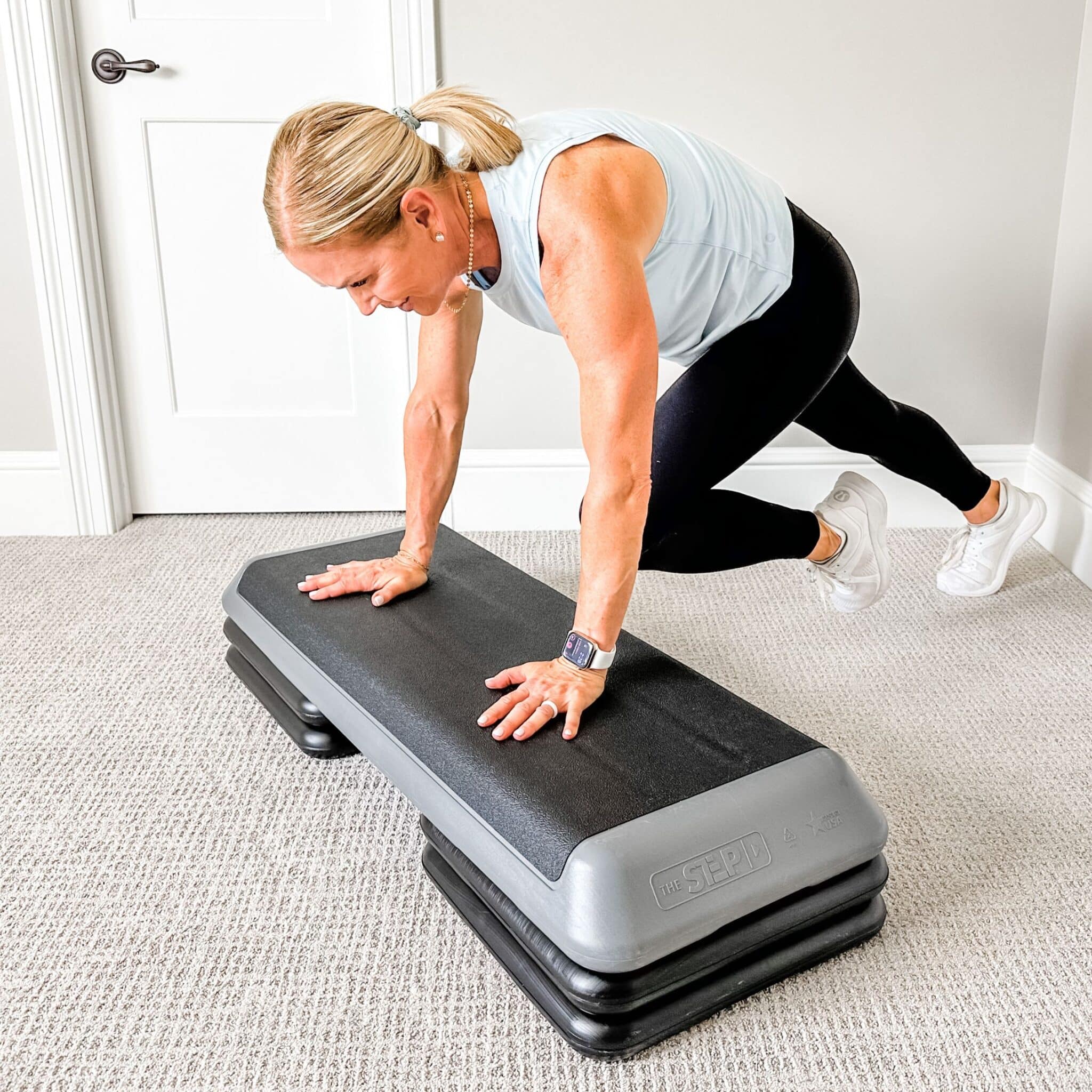
I’ve been in the fitness industry for almost 40 years, which means I’ve lived through every questionable technique the 80s and 90s gave us. Step aerobics in a thong leotard. SnackWell cookies by the sleeve. Burning sweat all itching.
I believed everything. Teach me some of it! And each time, I gave it all up.
So here are 7 things I used to focus on completely that have no place in my life at 60, and what I’m doing instead. If you still have any of these, take a look at your permission slip to set them up.
1. Endless Cardio (In the name of Skinny)
In the 40s, cardio was king and the goal was skinny, skinny, skinny. More miles, more classes, more burnout, everything. I looked at that calorie counter like it was going to give out a prize.
Now I know better. Muscle is what keeps you independent, mobile, and physically healthy as we age, and endless cardio doesn’t build it. Strength training does. I still love my cardio (walking is my favorite), but lifting comes first, and the goal is no longer limited. It’s strong enough to lift my grandson, my suitcase, and my own body off the ground for the next 30 years.
Cardio is to live longer, strength training is to live stronger, and training to walk is to live without pain. I wish someone had told me at 40 that skinny was never a prize.
2. Low Fat Everything
Raise your hand if you’ve lived through a lean age. Fat-free cookies, fat-free yogurt, fat-free salad dressing that tastes like regret.
Here’s what no one told us: when they cut out the fat, they fill the gap with sugar and refined carbs. We weren’t satisfied because we basically ate dessert all day and called it a meal. No wonder we were hungry after an hour.
Now healthy fats are a non-negotiable in my kitchen. Avocado, olive oil, nuts, salmon, whole eggs (yolk included, thank you very much). Fat keeps me full, supports my hormones, and makes food taste like food. The low fat category can stay in the 90s with my scrunchies.
3. Avoiding Salt
I spent years treating salt as the enemy, shaking my head at anyone who reached for the shaker.
Then perimenopause came, and I was dragging the mornings I used to skip. Turns out my body was low on sodium (yes, really!). As an active woman who sweats through workouts and teaches classes every week, I actually needed more salt, not less. I added my favorite LMNT electrolytes to my water, and my energy returned.
One important note: if you have high blood pressure or your doctor has told you to cut back on sodium (some people are genetically sensitive to salt), follow that direction. But for many women in the midst of an active life, the decades-old fear of the salt shaker is doing more harm than good.

4. Skipping Rest Days
There are no days off. That was a badge of honor. If I’m not sore, tired, and signed up for two classes back, I wasn’t trying hard enough.
What I know now: recovery is not laziness. It is productive. Rest is when your muscles rebuild and your body recovers from all that hard work. I take two full rest days a week now, and my workouts are all the better for it. My Oura ring keeps me honest when I’m tempted to overdo it anyway.
Read this twice: exercise breaks you, some builds you.
5. Everything Sugar Free
Diet soda, sugar-free gum, those little pastel packets of everything. I thought I was very beautiful.
At the time, fake things were giving me a headache. Once I stopped eating artificial sweeteners, the headaches started to subside, and food started to taste good again. These days I’d rather have real sugar and enjoy it than a chemical imitation that leaves me with headaches and cravings.
I’m always on the lookout for added sugar (the American Heart Association suggests women limit it to about 25 grams per day), but I’m not afraid of dessert. A real cookie, enjoyed at the table with the people I love, beats any sugar-free snack standing over the sink.
6. The Measure To Be The End All, Be All
For years, the number on the scale determined what kind of day I would have. Gained a pound? It’s a nasty day. I dropped a pound, and suddenly I was an amazing person.
Nonsense.
Here’s what I tell every midlife woman I coach: in menopause, your weight can fluctuate 3 pounds in one day from hormones, sodium, stress, and sleep. That daily number measures water and chaos, not your worth or progress.
I would like to track things that mean something: how much I lift, how my clothes fit, how I sleep, how much energy I have in my life. The measure gets a vote now, not a veto.
Use these 5 powerful ways to track fitness progress that don’t involve a scale.
7. Fashion Over Function
When I was younger, I wore nice shoes. Nice pointy, tight, blistering shoes, all day long, because that’s what you did.
At 60, I flipped it: work on fashion, and I’m not willing to be uncomfortable or do damage to my feet to look good. The best part? You don’t have to choose anymore. My closet is full of comfortable, non-slip shoes: layered walking shoes I can walk miles in, supportive sandals that still look great with a sundress, sneakers that go with everything.
Your feet should last you for decades. Dress them as you plan to continue using them.
What I’m Obsessed About Now
Protein in every meal. It lifts more than I did at 40. 7+ hours of sleep, walking around the pool, with shoes I never thought about after I put them on. And time with the people I love, because that’s an obsession that really pays off.
The moral of the story? Infatuation is not a problem. I just spent many years being obsessed with the wrong things. If any of these still hold you back, start where you are and let go of one this week. I would start with the scale.
PS. If you liked this, I wrote everything I do differently in 60 vs. 40 as a coach. It’s a longer version of this list, and it might be my favorite thing on the blog.